
Packaging decisions are no longer based only on appearance, protection, and cost. Brands are also looking at what happens to packaging after a product has been used. This has increased interest in recyclable and compostable packaging as alternatives to conventional packaging formats.
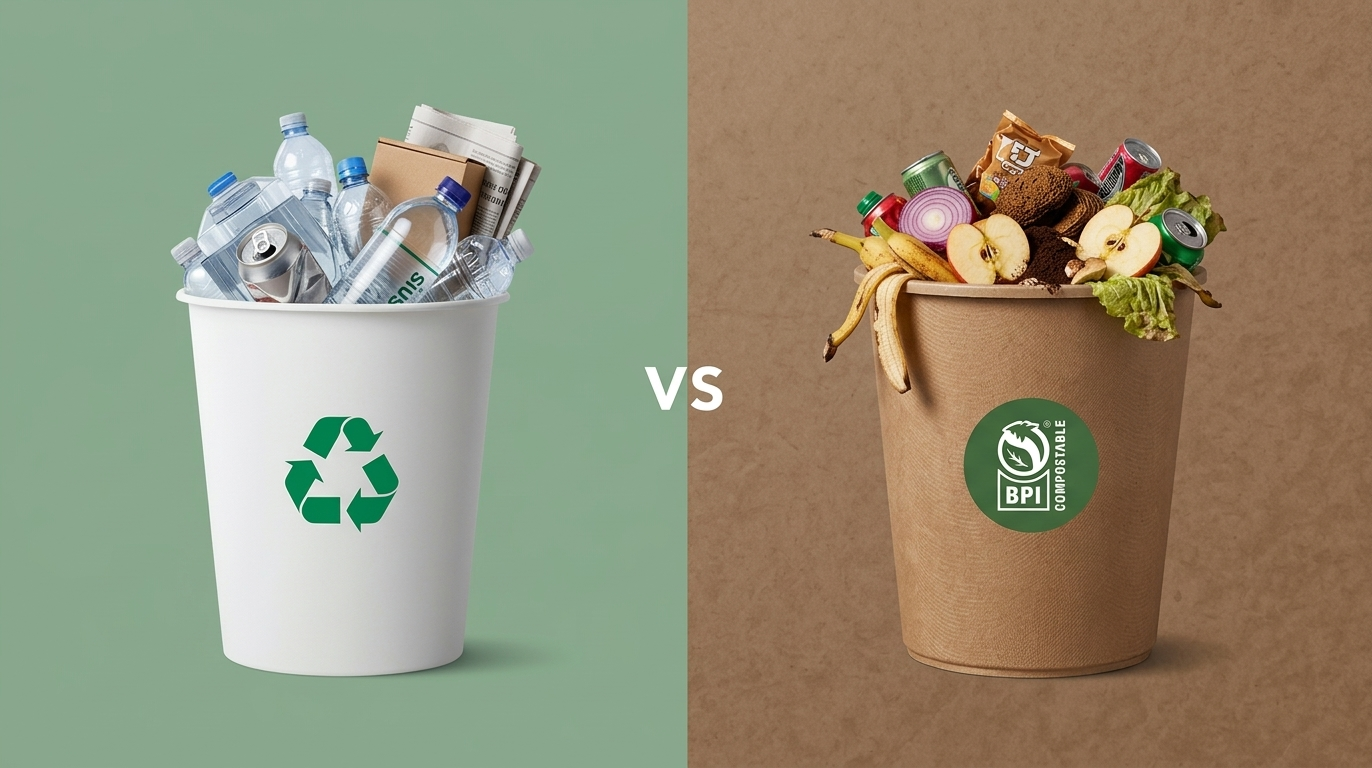
Recyclable and compostable packaging may both support more sustainable packaging goals, but they follow different end-of-life paths. Recyclable packaging is made to be collected and processed so its materials can be recovered and turned into new products. Compostable packaging, on the other hand, is intended to decompose in an appropriate composting environment rather than enter the regular recycling system.
That difference matters. A package can have an environmentally focused material story but still perform poorly if the disposal system does not support it.
This guide explains recyclable vs compostable packaging, how the two options differ, where each can be useful, and what brands should consider before making a packaging decision.

What Is Sustainable Packaging?
Sustainable packaging is an approach to packaging that considers environmental impact throughout the packaging lifecycle. This can include material selection, manufacturing, transportation, product protection, reuse, recycling, composting, and disposal.
Sustainable packaging does not refer to one specific material. Paper, cardboard, glass, metal, recycled plastics, compostable materials, and other formats can all play a role depending on how they are produced and managed after use.
Why Brands Are Moving Toward Eco-Friendly Packaging
Brands are exploring eco-friendly packaging for several reasons.
Reducing unnecessary material is one approach. Another is selecting packaging that can be recovered through established recycling systems or managed through suitable composting programs.
Packaging can also influence how customers understand a brand. Clear information about material composition and disposal can make sustainable packaging easier for customers to handle correctly.
How Packaging Choices Can Lower Environmental Impact
Packaging can contribute to environmental impact through material production, manufacturing, transportation, product waste, and disposal.
A practical packaging strategy therefore looks beyond the package itself.
For example, lightweight packaging may reduce material use and transportation weight, while durable packaging may help protect products from damage. A recyclable package may have value where appropriate collection and processing systems exist.
How Consumers View Sustainable Packaging Choices
Consumers may associate recyclable, compostable, recycled-content, paper-based, and other materials with more environmentally responsible packaging.
However, packaging claims need to be clear. Customers need to know what the package is made from and what they are expected to do with it after use.
A confusing disposal message can reduce the practical benefit of an otherwise well-designed package.
What Is Recyclable Packaging?
Recyclable packaging is packaging made from materials that can be collected, processed, and converted into materials or products for further use through an appropriate recycling system.
Recycling depends on local collection systems, package design, contamination, and available processing facilities.
How Recycling Works for Packaging Materials
The basic recycling process involves collection, sorting, processing, and manufacturing.
After packaging is discarded, recyclable materials are collected through suitable recycling systems. They are then sorted by material type and processed into usable material.
The recovered material can subsequently become an input for new products or packaging.
Because recycling systems differ by location, brands should understand the markets where their packaging will be sold rather than assuming that every recyclable package will be accepted everywhere.
Common Materials Used in Recyclable Packaging
Common recyclable packaging materials include paper, cardboard, glass, metals, and certain types of plastics.
Each material behaves differently in recycling systems.
Paperboard can be processed into new paper-based products, metals can be recovered and remanufactured, and glass can be processed for use in new glass products. Plastic recycling depends heavily on the specific resin, package format, collection system, and local processing capabilities.
Recyclable Paper and Cardboard Packaging
Paper and cardboard are widely used for cartons, shipping boxes, sleeves, food boxes, and other packaging formats.
Their advantages can include a printable surface, relatively simple structures, and compatibility with established paper-recovery systems in many markets.
However, coatings, laminations, adhesives, food contamination, and mixed materials can affect recyclability.
For brands using paper-based packaging, the entire package should be considered rather than looking only at the paperboard component.
Recyclable Plastic Packaging
Some plastic bottles, containers, tubs, and other formats can enter recycling systems.
Plastic packaging can provide useful properties such as moisture resistance, flexibility, durability, and low weight.
The challenge is that different plastic types and package constructions can have different recycling pathways. A package containing multiple materials may also be more difficult to recover.
Simple, clearly identified structures can make material management easier.
Recyclable Glass and Metal Packaging
Glass and metal can provide strong protection and are used for products such as beverages, food, cosmetics, and household goods.
Metal packaging can include aluminum and steel formats, while glass is commonly used for jars and bottles.
These materials can be useful where durability, product protection, and recovery systems align with the needs of the product.
What Is Compostable Packaging?
Compostable packaging is designed to break down into compostable material under defined composting conditions.
The important distinction is that “compostable” does not simply mean that a package will disappear anywhere it is thrown away.
Different compostable products are designed for different composting environments. Some require commercial or industrial composting conditions, while products specifically designed and certified for home composting may be suitable for home systems.
How Compostable Packaging Breaks Down Naturally
Compostable materials are designed to break down through biological processes under appropriate conditions.
The process depends on factors such as temperature, moisture, oxygen, microorganisms, material composition, and processing conditions.
This is why compostable packaging should be disposed of according to the instructions associated with the specific product.
Industrial Composting vs Home Composting
Commercial composting facilities offer controlled conditions that are usually not available in a home compost pile.
Not every package labeled compostable is designed for home composting.
For brands, this distinction is important when creating packaging claims and disposal instructions. A package should clearly communicate the conditions required for its intended end-of-life pathway.
Common Materials Used in Compostable Packaging
Compostable packaging can be produced from different materials, including certain plant-based fibers, paper-based structures, and compostable polymers.
The exact material does not determine compostability on its own. The finished package, coatings, adhesives, inks, and other components can also matter.
Brands should therefore evaluate the complete package rather than assuming that a plant-based material is automatically compostable.
Plant-Based Packaging Materials
Plant-based materials can come from renewable biological sources such as agricultural or plant-derived feedstocks.
Examples may include fiber-based packaging, molded fiber products, paper structures, and certain bio-based polymers.
“Plant-based” and “compostable” do not mean the same thing. A bio-based material may not compost, while some compostable packaging needs specific conditions to break down properly.
Compostable Bioplastics and Films
Some bioplastics and films are designed for composting rather than conventional plastic recycling.
These materials can be useful for selected applications where their performance characteristics and available composting infrastructure match the product requirements.
They should not automatically be placed in ordinary plastic recycling streams unless the local recycling program specifically accepts them.
Recyclable vs Compostable Packaging: Key Differences
The main difference between the two options is their intended end-of-life pathway.
Recyclable packaging is designed to retain material value through recovery and reprocessing. Compostable packaging is designed to break down into compost under appropriate conditions.
Neither pathway works independently of infrastructure.
Difference in Environmental Impact
Environmental impact depends on the entire lifecycle of the package.
Material sourcing, manufacturing, transportation, product protection, package weight, reuse potential, recovery systems, and disposal all matter.
For this reason, it is difficult to say that recyclable packaging or compostable packaging is automatically more sustainable in every situation.
Difference in Disposal Process
Recyclable packaging generally needs to enter an appropriate recycling collection and processing system.
Compostable packaging needs an appropriate composting environment.
If a compostable package is sent to a disposal route that does not provide suitable composting conditions, its intended benefit may not be realized.
Difference in Material Requirements
Recyclable packaging is usually designed around materials that can be recovered through a particular recycling system.
Compostable packaging requires materials and package components capable of meeting the requirements of the intended composting environment.
This makes package construction important in both cases.
Difference in Manufacturing Process
Manufacturing varies considerably depending on the material and packaging format.
Recyclable packaging can use conventional paper, glass, metal, or plastic manufacturing processes with recycled content where appropriate.
Compostable packaging may require specialized materials, coatings, films, adhesives, or manufacturing processes.
The production method should therefore be evaluated alongside material selection.
Difference in Long-Term Sustainability
Long-term sustainability depends on whether a packaging system can function efficiently from production through disposal.
A recyclable package can be useful when recovery infrastructure is strong. Compostable packaging can make sense where suitable composting systems exist and the package is difficult to manage through conventional recycling.
The strongest packaging strategy is the one that matches the product and the real-world system available to customers.
Recyclable Packaging vs Compostable Packaging: Comparison Table
| Factor | Recyclable Packaging | Compostable Packaging |
| Material Sources | Paper, cardboard, glass, metal, and selected plastics | Fiber-based materials, compostable polymers, and other suitable materials |
| Main End-of-Life Route | Recycling and material recovery | Appropriate composting system |
| Durability | Often suitable for demanding storage and transport needs | Depends heavily on material and package design |
| Disposal Requirement | Access to a suitable recycling collection and processing system | Access to a suitable composting environment |
| Cost | Varies by material, format, recycled content, and volume | Can vary based on material, certification, production volume, and format |
| Availability | Often widely available, but acceptance varies by location | Availability and collection options vary considerably |
| Product Applications | Food cartons, bottles, shipping boxes, containers, and retail packaging | Food-service items, selected food packaging, bags, liners, and specialty applications |
| Main Consideration | Whether the package can realistically enter a recycling system | Whether the package can realistically reach the intended composting system |
Benefits of Recyclable Packaging
Recyclable packaging can provide practical benefits when the material and local recovery system work together.
Reduces Waste Through Material Recovery
Instead of treating used packaging only as waste, recycling allows suitable materials to be recovered and processed for further use.
This can help keep material in circulation rather than sending it directly to disposal.
Supports Circular Economy Systems
Recycling supports a circular economy approach by recovering materials and returning them to manufacturing processes.
The effectiveness of this system depends on collection, sorting, processing, and demand for recovered materials.
Widely Available Recycling Infrastructure
Many regions have established recycling systems for selected paper, cardboard, glass, metal, and plastic packaging.
However, acceptance varies. Brands should check the actual requirements of their target markets.
Suitable for Many Product Categories
Recyclable materials can be used across food, beverage, retail, e-commerce, cosmetic, and industrial packaging.
This versatility makes recyclable formats relevant to many packaging applications.
Benefits of Compostable Packaging
Compostable packaging offers a different end-of-life pathway.
Helps Reduce Traditional Plastic Waste
For certain applications, compostable materials can provide an alternative to conventional plastics.
Their usefulness depends on whether the material is appropriate for the product and whether the required composting infrastructure is available.
Breaks Down Into Compostable Material
The purpose of compostable packaging is to break down under suitable composting conditions rather than remain as a conventional packaging material.
The exact breakdown conditions depend on the material and applicable standard or certification.
Supports Plant-Based Packaging Innovation
Compostable packaging development has encouraged innovation in fiber-based materials, bio-based polymers, films, coatings, and other packaging components.
This gives brands additional material options for selected applications.
Appeals to Environmentally Conscious Customers
Compostable packaging can communicate a sustainability-focused approach when its claims are accurate and disposal instructions are clear.
The packaging should explain the appropriate disposal pathway rather than simply using broad environmental language.
Limitations of Recyclable Packaging
Recyclable packaging has limitations that brands should understand before making sustainability claims.
Recycling Availability Depends on Location
A package may be technically recyclable but not accepted by the recycling program available to a particular customer.
Local collection and processing capabilities matter.
Contamination Can Affect Recycling
Food residue, incompatible materials, coatings, adhesives, and mixed packaging structures can interfere with recycling.
Designing packaging for easier separation and cleaner recovery can help.
Some Materials Have Limited Recycling Cycles
Material recovery does not mean that every material can be recycled indefinitely without changes in quality or processing.
Brands should consider the complete material system rather than treating the recycling label as the only sustainability factor.
Limitations of Compostable Packaging
Compostable packaging also has practical limitations.
Requires Proper Composting Conditions
Compostable packaging needs the right biological and environmental conditions to break down as intended.
Without access to the appropriate composting system, the intended end-of-life pathway may not be available.
Not All Compostable Materials Break Down at Home
Commercially compostable and home-compostable are not necessarily the same thing.
Brands should clearly state the disposal conditions required by their particular packaging.
Higher Production Costs in Some Cases
Specialized compostable materials and packaging components can cost more than conventional alternatives, depending on the material, supplier, order size, and production process.
Cost should therefore be evaluated alongside performance and end-of-life requirements.
Recyclable vs Compostable Packaging: Which One Should Brands Choose?
There is no single option that fits every brand.
The decision should begin with the product rather than the sustainability label.
Choosing Packaging Based on Product Requirements
Consider whether the package needs moisture resistance, grease resistance, oxygen protection, heat resistance, strength, flexibility, visibility, or a long shelf life.
A sustainable packaging material still needs to protect the product effectively. If poor packaging causes food or product waste, the overall environmental outcome may be affected.
Considering Customer Expectations
Think about where and how customers will dispose of the package.
If most customers have convenient access to a recycling program but limited access to composting, a recyclable format may be more practical for that market.
The opposite may be true for products distributed through a food-service system with established commercial composting.
Evaluating Supply Chain and Disposal Options
Brands should look at the entire packaging journey.
Ask suppliers where materials come from, how the package is manufactured, what certifications apply, what disposal route is intended, and whether customers can realistically access that route.
Balancing Cost and Sustainability Goals
Cost remains an important part of packaging decisions.
Compare material costs, manufacturing requirements, shipping weight, minimum order quantities, storage, package performance, and end-of-life options rather than comparing material prices alone.
Industries Using Recyclable and Compostable Packaging
Different industries can use both packaging approaches depending on their specific requirements.
Food and Beverage Packaging
Food packaging may use recyclable cartons, cans, glass containers, paperboard boxes, or selected plastics.
Compostable formats may also be used for certain food-service products, bags, liners, and packaging applications where suitable composting systems exist.
Cosmetic and Beauty Packaging
Cosmetic packaging can include glass containers, metal components, paperboard cartons, plastic bottles, jars, and other formats.
Brands may use recyclable materials or selected compostable components where product protection and performance allow.
E-commerce Packaging
Shipping boxes, paper mailers, protective inserts, and other e-commerce formats can be designed around material recovery and reduced material use.
The package also needs to withstand handling, transportation, and storage.
Retail Product Packaging
Retail brands can consider recyclable cartons, paperboard sleeves, glass containers, metal tins, and suitable plastic formats.
Compostable packaging may also have a role in selected product categories where disposal infrastructure supports it.
Subscription Box Packaging
Subscription packaging needs to balance presentation, durability, shipping efficiency, and material use.
Recyclable paperboard and corrugated structures can work well for many subscription models, while compostable components may be considered for selected inserts or protective elements.
Luxury Sustainable Packaging
Luxury packaging often combines rigid structures, premium papers, specialty finishes, inserts, and decorative elements.
Sustainable luxury packaging can focus on reducing unnecessary components, selecting recyclable materials, using recycled content where appropriate, and designing packaging that can be reused or recovered.
How to Identify Truly Sustainable Packaging
Sustainability claims should be examined carefully rather than judged by appearance alone.
Checking Recycling Labels and Certifications
Look for clear information about the material and its intended disposal route.
Where certifications are relevant, check what the certification actually covers and whether it applies to the complete package.
A certification or environmental symbol should not be treated as proof that a package can be disposed of in every local system.
Understanding Greenwashing in Packaging
Terms such as “green,” “eco-friendly,” “natural,” or “environmentally friendly” can be vague when they are not supported by specific information.
A stronger packaging claim explains the relevant attribute.
For example, instead of relying only on a broad sustainability statement, brands can provide clear information about the material, recycled content, recyclability, composting conditions, or disposal instructions.
Choosing Responsible Packaging Suppliers
A supplier should be able to explain the material composition, package construction, certifications where applicable, disposal requirements, and performance characteristics of the packaging.
Ask questions before placing a large order.
This can prevent a situation where packaging is marketed as sustainable but does not fit the disposal infrastructure available to customers.
Future Trends in Sustainable Packaging
Sustainable packaging continues to develop as brands look for ways to reduce material use, improve recovery, and develop alternative packaging materials.
Bio-Based Packaging Innovations
Research and commercial development continue around materials derived partly or entirely from biological feedstocks.
The important distinction is that bio-based does not automatically mean recyclable or compostable. Each material needs to be evaluated according to its actual properties and end-of-life pathway.
Improved Recycling Technologies
Better sorting, processing, material recovery, and package design can help improve the performance of recycling systems.
Packaging manufacturers are also exploring ways to simplify structures and improve material compatibility.
Circular Packaging Systems
Circular packaging focuses on keeping materials in productive use for as long as practical.
This can involve recycling, reuse, refill models, recycled content, and better package design.
The goal is to move beyond a simple “use and discard” model.
Zero-Waste Packaging Solutions
Some brands are experimenting with refill systems, reusable packaging, minimal packaging, concentrated products, and package-free purchasing models.
These approaches do not replace recyclable or compostable packaging in every application, but they show how packaging strategies can evolve beyond material substitution alone.
Frequently Asked Questions
Is compostable packaging better than recyclable packaging?
Neither is automatically the right choice for every product. The appropriate option depends on the packaging requirements, available recycling or composting infrastructure, material properties, cost, and disposal behavior.
Can recyclable packaging be composted?
Not normally. Recyclable packaging is designed for recycling, while compostable packaging is designed for appropriate composting conditions. Always follow the disposal instructions for the specific package.
Are all compostable packages biodegradable?
Compostable materials are designed to biodegrade under specified composting conditions, but the terms should not be treated as interchangeable. A biodegradable claim does not by itself explain where, how, or under what conditions a material will break down.
What packaging materials are easiest to recycle?
This depends on local recycling infrastructure. Paper and cardboard, glass, and metals can have established recycling pathways in many markets, while plastic acceptance varies significantly by material type and location.
Is compostable packaging more expensive?
It can be, although costs vary according to material, supplier, order quantity, package design, and manufacturing process.
Which packaging option is best for food products?
The answer depends on the food. Moisture, grease, oxygen, temperature, shelf life, transportation, food safety, and disposal requirements should all be considered before selecting a packaging material.
Conclusion
The choice between recyclable and compostable packaging is not simply a choice between two “eco-friendly” labels.
Recyclable packaging is designed around material recovery, while compostable packaging is designed around controlled biological breakdown under suitable conditions. Both approaches can have useful applications, but their effectiveness depends on product requirements and the systems available after use.
For brands, the most useful starting point is to understand the entire packaging lifecycle. Consider the material, package construction, product protection, manufacturing, transportation, customer use, and realistic disposal route.
When those factors are evaluated together, recyclable vs compostable packaging becomes a practical packaging decision rather than a simple marketing choice.