

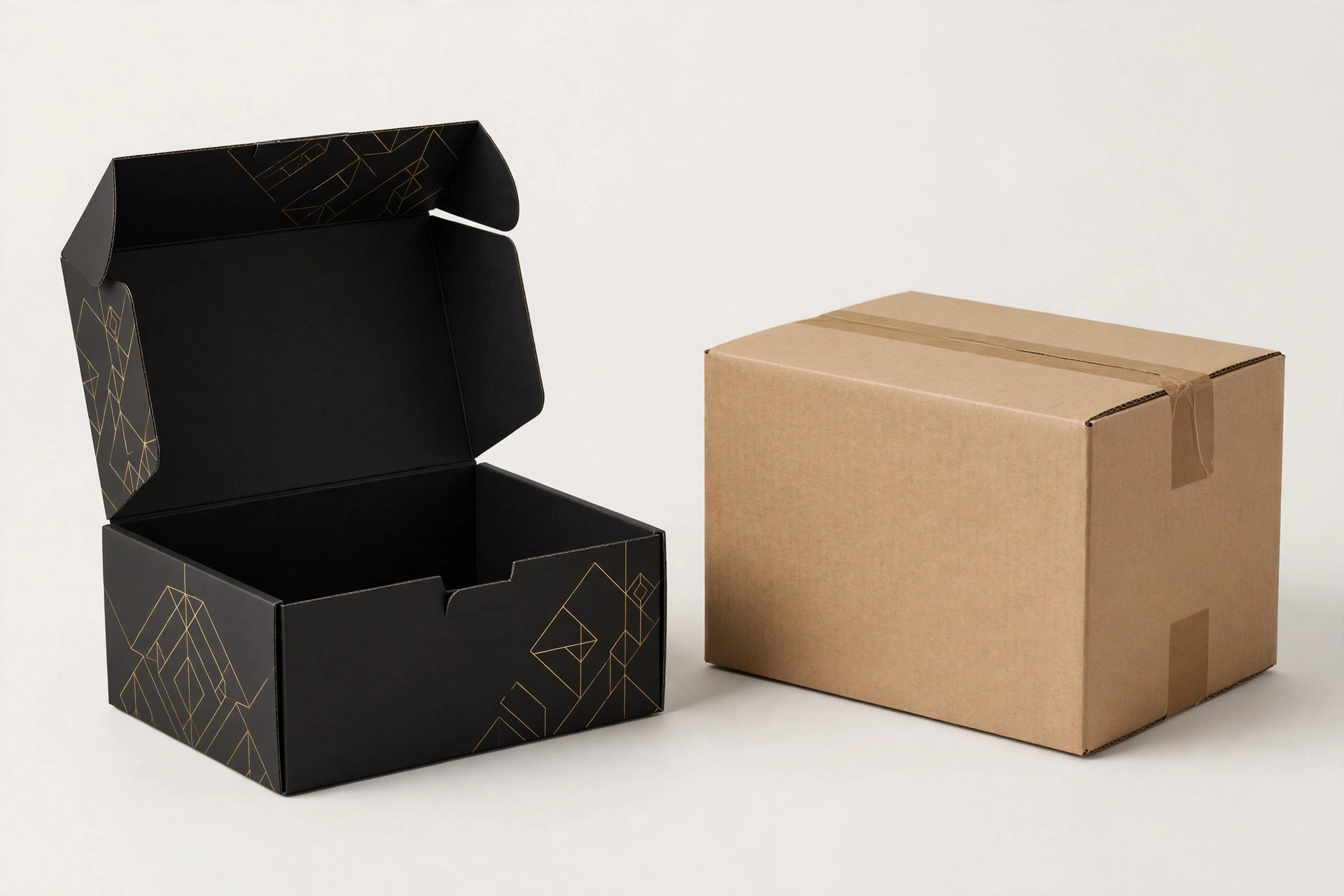
Choosing the right packaging is an important part of running a business. The box you use can affect product safety, shipping costs, and the way customers feel when they receive their orders. Some businesses need packaging that looks attractive and creates a good first impression, while others need strong boxes that can handle long-distance delivery.
This is why choosing between a mailer box and a shipping box matters. Both options are useful, but they serve different purposes. Understanding their features can help you select packaging that fits your products, budget, and business goals.
Mailer Box vs Shipping Box
A mailer box is mainly designed to present and protect products while providing a neat unboxing experience. A shipping box is generally used to protect goods during transportation, storage, and handling.
Although both types of boxes can be used for delivery, they are not always the best choice for the same job.

Here are the main differences:
- Appearance: Mailer boxes often have a clean, professional design that works well for branded packaging.
- Protection: Shipping boxes are available in different strengths and sizes to suit various products and shipping conditions.
- Assembly: Many mailer boxes fold into shape without needing much extra material, while standard shipping boxes usually require tape.
- Branding: Mailer boxes are commonly printed with logos, brand colors, and custom designs.
- Cost: The price depends on the box size, material, printing, order quantity, and shipping costs.
Choose the option that best fits your product and how you want it delivered to your customers.
What Is a Mailer Box?
A mailer box is a type of packaging designed to hold products securely while giving the package a polished appearance. It often has a folding design with connected flaps that close the box without requiring as much tape as a traditional shipping carton.
Mailer boxes are popular among online stores, subscription services, clothing brands, cosmetics businesses, and companies that want their packaging to feel like part of the product.
Key Features of Mailer Boxes
- Easy to assemble: Many styles can be folded into shape quickly.
- Professional appearance: A clean structure helps products look well presented.
- Branding options: Businesses can add logos, product details, colors, and other design elements.
- Suitable for smaller products: They work well for items such as apparel, accessories, books, and selected beauty products.
- Convenient unboxing: Their opening style can make receiving an order feel more enjoyable.
When Are Mailer Boxes Most Useful?
Mailer boxes are a good option when presentation matters alongside product protection. For example, a skincare brand may use a printed mailer box to make an online order feel more personal. A clothing store may choose one to keep garments neatly packed and improve the customer’s first impression.
However, the box must still be suitable for the product’s weight, size, and shipping conditions. Attractive packaging alone is not enough to guarantee safe delivery.
What Is a Shipping Box?
A shipping box is used to transport products safely from one place to another. It is usually made from corrugated cardboard, which helps protect items from pressure and damage.
Shipping boxes come in different sizes and strengths, making them suitable for everything from lightweight products to heavy, fragile, or large items.
Key Features of Shipping Boxes
- Different strength levels: Box construction can be selected according to the weight and fragility of the contents.
- Practical design: Standard cartons are designed for packing, stacking, storage, and transportation.
- Flexible sizing: Many dimensions are available for different products.
- Easy sealing: Packing tape helps close the box and secure its contents.
- Extra protection options: Businesses can add paper padding, inserts, foam, or other protective materials when needed.
Who Should Use Shipping Boxes?
Shipping boxes are useful for businesses that regularly send orders through courier services or freight companies. They are especially practical for products that need extra protection or require larger packaging.
For example, an electronics seller may use a strong corrugated carton with suitable cushioning to protect a device during transit. A wholesale supplier may choose shipping boxes that can be stacked efficiently in storage and during transport.
The important point is to choose the correct box strength and internal protection rather than assuming that every shipping box offers the same level of safety.
The Three-Way Distinction: Product Box vs Mailer Box vs Shipping Box
Product boxes, mailer boxes, and shipping boxes may look similar, but each has a different role in packaging.
Product Box
A product box is designed mainly to hold and present an individual item. It often includes product information, attractive graphics, and branding.
Examples include boxes for perfumes, watches, cosmetics, and electronic accessories. Some product boxes need an extra outer box for safe shipping.
Mailer Box
A mailer box keeps your product safe while making it look good. It is commonly used to send orders directly to customers, especially when the business wants to create a branded opening experience.
Shipping Box
A shipping box focuses mainly on protecting products during transportation. It can be used alone for some products or as an outer box for extra protection.
How Do They Work Together?
A business does not always need to choose just one type of packaging. In some cases, all three can be used together.
For example:
- A product is placed inside its individual product box.
- The product box is placed inside a larger shipping carton.
- Protective material is added to reduce movement during delivery.
For a less fragile product, a suitable mailer box may be enough to combine presentation and delivery protection in a single package.
The best arrangement depends on the product, its value, and the risks involved during shipping.
Mailer Box vs Shipping Box: Side-by-Side Comparison
Following are the main differences to help you compare.
| Feature | Mailer Box | Shipping Box |
|---|---|---|
| Main purpose | Product presentation and delivery | Transportation and protection |
| Appearance | Often designed for a branded look | Usually practical and simple |
| Assembly | Commonly folds into shape | Often requires tape |
| Branding | Custom printing is a popular option | Can also be printed or labeled |
| Product suitability | Small to medium-sized products, depending on design | A wide range of product sizes and weights |
| Protection | Depends on material, construction, and cushioning | Depends on board strength and packing method |
| Packing experience | Often provides a more polished opening experience | Usually focuses on efficient packing |
| Cost factors | Design, printing, size, and material | Size, strength, tape, material, and shipping |
| Common uses | Subscription boxes, apparel, gifts, and branded orders | Wholesale goods, heavy items, and general shipments |
Neither box type is automatically better in every situation. A well-made mailer box may protect a product effectively, while a shipping box with the right construction may be the more practical choice for a heavy or fragile item.
When to Choose a Mailer Box
A mailer box may be the right option if your business wants packaging that is practical and visually appealing.
Consider using one when:
- Your brand experience matters: You want customers to recognize your brand as soon as they open the package.
- You sell directly to consumers: Online stores can use mailer boxes to create a consistent presentation across customer orders.
- Your products fit neatly inside: A suitable size reduces unnecessary empty space and can limit product movement.
- You send subscription packages: A consistent box design helps create a familiar experience for returning customers.
- You want custom packaging: Printed designs, brand colors, and simple messages can make your packaging more memorable.
Examples of Businesses That Use Mailer Boxes
Clothing brands can pack folded shirts, scarves, and accessories in mailer boxes. Beauty businesses may choose them for selected skincare products, provided the packaging offers suitable protection. Gift businesses can use printed mailer boxes to make their products feel more special.
Before ordering, consider the weight of the product, the type of journey it will make, and whether extra cushioning is needed. A box that looks good but does not protect its contents can lead to damaged orders and unhappy customers.
When to Choose a Shipping Box
A shipping box is often the better option when safe transportation is the main concern. Its practical design makes it suitable for many types of commercial deliveries.
You may want to choose a shipping box when:
- Your products are heavy: Each carrier may use different rules to calculate shipping costs.
- Your goods are fragile: Use a properly sized carton with protective inserts or cushioning.
- You ship in bulk: Standard cartons can make packing, stacking, and storage easier.
- Your products have unusual dimensions: Shipping boxes are available in a wide range of sizes.
- Your deliveries involve long distances: Appropriate packaging can help products withstand repeated handling.
- You need simple, practical packaging: A standard carton may be sufficient when decorative presentation is not a priority.
How to Improve Shipping Box Protection
Choosing the right carton is only one part of protecting an order. You should also:
- Select the appropriate box for your products.
- Fill empty spaces so the contents do not move freely.
- Use suitable cushioning for fragile items.
- Seal all openings securely with appropriate packing tape.
- Check the packed box weight against the box’s recommended limits.
- Test packaging for products that are especially valuable or easily damaged.
These steps can reduce the risk of damage and help your business avoid unnecessary returns or replacement costs.
Dimensional Weight: The Hidden Cost of the Wrong Box
Box selection can affect shipping costs in ways that are easy to overlook. One important factor is dimensional weight, sometimes called DIM weight.
Dimensional weight is a pricing method used by many shipping carriers. It considers the amount of space a package occupies rather than relying only on its actual weight.
This means a large, lightweight package may cost more to ship than expected.
How Is Dimensional Weight Calculated?
A common formula is:
Dimensional weight = Length × Width × Height ÷ DIM factor
Size and weight rules vary by carrier and shipping service. Some carriers use inches and pounds, while others use centimeters and kilograms.
For example, imagine a package measuring 16 × 12 × 8 inches. Its volume is 1,536 cubic inches. If a carrier uses a divisor of 139, its dimensional weight would be approximately 11.1 pounds before the carrier applies its rounding rules.
The carrier may compare this result with the package’s actual weight and use the applicable billable weight according to its pricing policy.
Why Does the Box Size Matter?
A box that is much larger than the product can increase the billable weight and require more packing material.
A smaller, properly fitted box can help reduce wasted space while keeping the product secure. However, reducing the box size too much can remove the room needed for cushioning.
Before choosing your packaging, check the dimensional-weight rules of your shipping provider. Do not assume that every carrier uses the same divisor or billing method.
Right-Sizing the Box
Right-sizing means selecting packaging that provides enough room for the product and its protective materials without adding unnecessary space.
It is a useful way to balance product safety, material use, and shipping expenses.
Steps to Find the Right Box Size
- Measure the product: Measure the product’s length, width, and height in the position it will be packed.
- Allow room for protection: Add the space required for bubble wrap, paper padding, inserts, or other protective materials.
- Check the packed dimensions: Consider the final external dimensions of the closed package, as these may be used by the carrier to calculate shipping charges.
- Avoid excessive empty space: A package that is too large may increase shipping costs and allow the product to shift during transit.
- Test the packaging: Close the box and check that the product stays in place.
Why Right-Sizing Matters
The correct box size can help businesses:
- Reduce unnecessary packaging material.
- Limit product movement during delivery.
- Make storage more efficient.
- Manage dimensional-weight charges.
- Create a cleaner and more professional package.
The goal is to choose a box that fits the product well while still providing enough protection.
Can You Use a Mailer Box for Shipping?
Yes, you can use a mailer box for shipping if it is strong enough to protect the product during delivery.
Many corrugated mailer boxes are made for direct shipping. However, some decorative mailer boxes may not be strong enough for certain products or shipping conditions.
Before shipping a product in a mailer box, consider these factors:
- Material strength: The board should be suitable for the weight and fragility of the product.
- Closure: The box should stay securely closed throughout handling and transportation.
- Product fit: The contents should not move excessively inside the package.
- Weather exposure: Consider whether the product needs additional protection from moisture or other environmental conditions.
- Carrier requirements: Check any relevant packaging and labeling rules for your chosen delivery service.
For lightweight products that fit securely, a suitable mailer box may work well without an additional outer carton. For heavy, fragile, or unusually shaped items, a stronger shipping box with proper cushioning may be a safer choice.
The key is to judge the packaging by its actual performance, not just by its name.
Decision Framework: Five Questions
If you are unsure which box to choose, answer these five questions before placing your packaging order.
Question 1: What Are You Shipping?
Start with the product itself. Lightweight clothing, books, glass products, and electronic devices have different packaging needs.
Choose a box that matches the product’s weight, dimensions, and level of fragility.
Question 2: How Important Is Presentation?
If customers are likely to notice and appreciate branded packaging, a mailer box may be a good choice. If the shipment is mainly for bulk transport or business-to-business delivery, a standard shipping carton may be more practical.
Question 3: How Much Protection Is Required?
Consider how far the package will travel and how it will be handled. Fragile products may need inserts, cushioning, or a stronger outer carton regardless of which box style you select.
Question 4: What Is Your Total Packaging Cost?
Do not compare boxes by purchase price alone. Consider the total cost, including:
- Box price per unit.
- Printing and design costs.
- Tape and protective materials.
- Shipping charges.
- Storage requirements.
- Potential costs of damaged goods and returns.
A lower-priced box may not be the most economical option if it requires extra materials or leads to more damaged products.
Question 5: Will the Box Work for Your Business as You Grow?
Consider how many orders you expect to ship and whether you need different sizes for different products. Standard sizes may be convenient for regular shipments, while custom mailer boxes may help a brand maintain a consistent customer experience.
Once you have answered these questions, compare suitable packaging samples before making a large order.
Frequently Asked Questions
Is a mailer box better than a shipping box?
Neither option is always better. A mailer box is useful when product presentation and delivery protection are both important. A shipping box may be more suitable for heavy goods, bulk orders, or products that require a stronger outer carton.
Are mailer boxes strong enough for shipping?
Some are. Corrugated mailer boxes can provide good protection when their construction matches the product and shipping conditions. Lightweight decorative boxes may need an additional shipping carton.
Do shipping boxes cost less than mailer boxes?
Standard shipping boxes may cost less than custom-printed mailer boxes, but prices depend on material, dimensions, order quantity, and supplier. Compare the total packaging and delivery costs before deciding.
Can I print my logo on a shipping box?
Yes. Many shipping boxes can be printed with logos, brand colors, handling instructions, or other design elements. Printing options and costs vary by supplier and order size.
Which box is best for an online store?
The answer depends on the products you sell. A mailer box can suit lightweight products and brands that focus on presentation. A shipping box may be more practical for heavier, fragile, or larger items. Some stores use both types for different orders.
How can I reduce shipping costs through better packaging?
Measure your products, choose suitable box dimensions, avoid unnecessary empty space, and check your carrier’s dimensional-weight rules. Keep enough room for the cushioning required to protect the contents.
Should I use an extra box around my mailer box?
An outer box may be useful for fragile products, long-distance deliveries, or shipments that need additional protection. For other products, a properly designed mailer box may be suitable on its own. Test the packaging before using it for regular orders.
Are custom mailer boxes worth the investment?
They can be worthwhile for businesses that value branded presentation and customer experience. However, the benefits should be balanced against printing costs, order volume, packaging performance, and the needs of your target customers.
Conclusion
Choosing between a mailer box and a shipping box comes down to understanding your product, your customers, and your delivery requirements.
Mailer boxes are a strong option for businesses that want attractive packaging and a pleasant unboxing experience. Shipping boxes are often more practical for bulk orders, heavier products, and shipments that need suitable structural protection. Both can work well when their size and construction match the job.
Before making a decision, consider the product’s weight, fragility, shipping distance, packaging budget, and branding goals. Check the carrier’s dimensional-weight rules and choose a box that leaves enough room for proper protection without wasting space.
The best packaging is the one that protects your product, supports your brand, and keeps the total cost reasonable.