
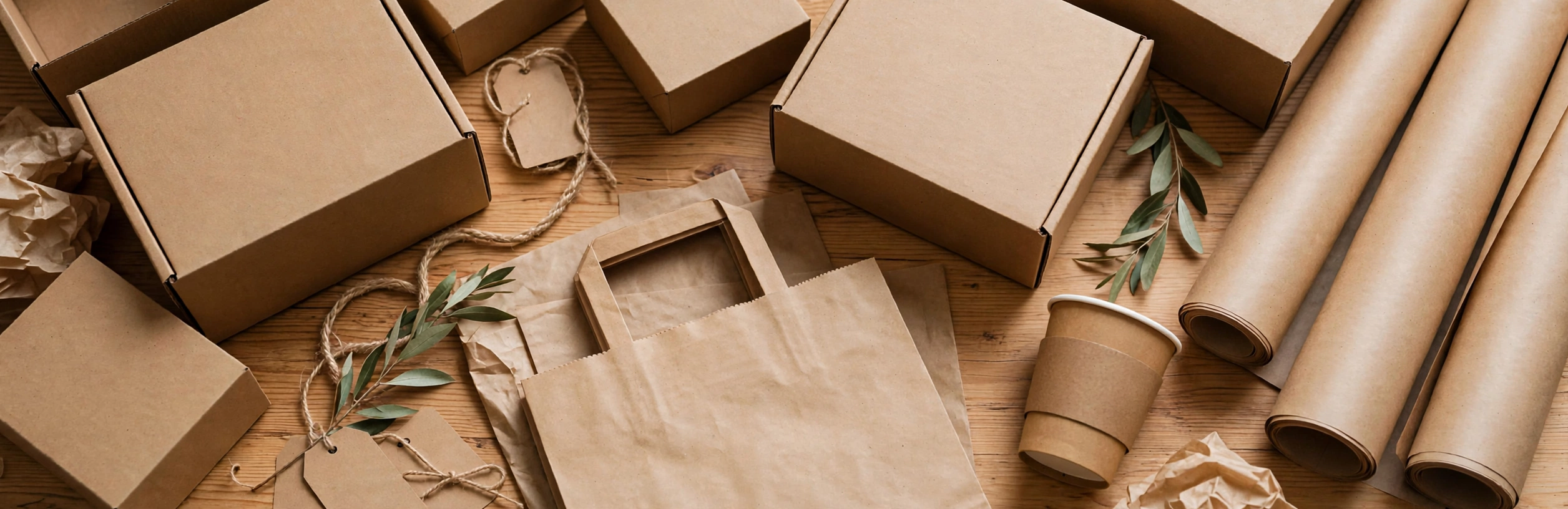
If you have ever ordered something online, you have held kraft packaging in your hands. That plain brown shipping box, the paper bag from a bakery, the wrap around a fragile item. All of it is kraft.
Kraft packaging is widely used because it is strong and suitable for many products. Understanding its different types can help businesses choose the right material for their packaging needs.
What Is Kraft Packaging?
Kraft packaging is packaging made from kraft paper, a strong paper produced through the kraft pulping process. The word “kraft” comes from German and means “strength,” which tells you everything about why this material exists.
In the kraft process, wood chips (usually from pine) are cooked in a chemical solution that breaks down the lignin holding the fibers together. What remains are long, strong cellulose fibers. These fibers are what give kraft paper its famous tear resistance. Compared to regular paper made the same weight, kraft is noticeably tougher.

Unbleached kraft keeps its natural brown color. That is the brown you associate with shipping boxes and paper bags. It can also be bleached white for a cleaner look, which we will cover below.
Types of Kraft Paper Used in Packaging
Not all kraft paper is the same. Here are the main types you will run into when choosing packaging.
1. Virgin Kraft Paper
Made from 100 percent fresh wood pulp with no recycled content. This is the strongest form of kraft, with the longest fibers and the best tear and burst resistance. It is the right pick for heavy-duty shipping boxes, export packaging, and anything that has to survive rough handling. Box liners are available in different paper weights, depending on the level of strength and protection required.
2. Recycled Kraft Paper
Made from post-consumer or pre-consumer waste paper. It is weaker than virgin kraft because recycled fibers are shorter, but it is cheaper and easier on the environment. Perfect for general shipping boxes, e-commerce packaging, and retail bags where extreme strength is not needed. Typical range: 110 to 200 GSM.
3. Bleached (White) Kraft Paper
Virgin kraft that goes through bleaching to get a bright white surface. It keeps most of the strength but looks far more premium. Brands use it for cosmetics, food cartons, and retail packaging where full-color printing needs to pop. Brown kraft dulls printed colors; white kraft does not.
4. Coated Kraft Paper
Kraft paper with a wax, clay, or plastic coating added for moisture or grease resistance. Standard kraft soaks up water and oil, so coated versions are used for frozen food, burger wraps, and anything that needs a barrier. One trade-off: coatings can make recycling harder, so always check with your supplier.
5. Sack Kraft Paper
A heavy-duty grade built for bulk bags like cement, flour, and pet food sacks. Extremely tear-resistant and designed to carry serious weight without splitting.
Key Benefits of Kraft Packaging
1. Exceptional Strength
The long fibers from the kraft process make this paper far stronger than regular paper at the same weight. That means thinner, lighter packaging that still protects the product.
2. Eco-Friendly
Uncoated kraft paper is generally recyclable and can biodegrade under suitable conditions. Its environmental impact depends on how it is manufactured, the fibers used, and how it is disposed of. FSC and PEFC certifications can help identify paper sourced from responsibly managed forests.
3. Versatile
Bags, boxes, wraps, void fill, labels, tape. Kraft works across almost every packaging format, which makes it easy for a brand to keep one consistent material story.
4. Cost-Effective
Kraft is generally cheaper than rigid board, plastic alternatives, and premium paperboard. Recycled kraft is the most budget-friendly option of all.
5. Great for Branding
Brown kraft paper has a simple, natural appearance that works well for handmade products and minimalist packaging. It works well with custom stamps, embossed designs, and foil details. For full-color designs, white kraft is the better canvas.
6. Lightweight
Because it is strong at lower weights, kraft keeps shipping costs down compared to heavier materials doing the same job.
Common Uses of Kraft Packaging
- Shipping boxes: Corrugated boxes use kraft liners for the strength needed in transit.
- Shopping and takeaway bags: The classic brown paper bag is kraft.
- Food packaging: Burger wraps, bakery boxes, produce bags, coffee bags. Food-grade kraft is non-toxic and breathable, which keeps baked goods fresh.
- E-commerce mailers: Kraft mailer boxes and padded envelopes.
- Protective wrapping and void fill: Crumpled kraft paper replaces bubble wrap as a sustainable filler.
- Gift wrapping and labels: Its natural texture suits handmade and artisanal brands.
Kraft Paper vs Regular Paper
| Feature | Kraft Paper | Regular Paper |
|---|---|---|
| Strength | High (long fibers) | Moderate |
| Eco profile | Biodegradable, recyclable | Often bleached with additives |
| Look | Rustic, natural texture | Smooth, uniform |
| Cost | Slightly higher | Lower |
| Best for | Packaging, shipping, bags | Printing, writing |
Limitations of Kraft Packaging
Kraft is not perfect. Standard kraft is not waterproof and absorbs grease, so it needs a coating for wet or oily products. It also absorbs ink, which can dull fine print on the brown surface. And while it is recyclable, food-soiled or heavily coated kraft often cannot go in standard recycling. None of these are dealbreakers, but they matter when you spec the material.
FAQs
Is kraft packaging really eco-friendly?
Yes, with one condition. Uncoated kraft is biodegradable, recyclable, and made from renewable wood with a relatively clean manufacturing process. Coated or laminated kraft is harder to recycle, so keep coatings minimal if sustainability is your goal.
Is kraft paper waterproof?
No. Standard kraft absorbs water. Wax-coated or laminated kraft resists moisture and is used for frozen food and beverage carriers.
What does GSM mean in kraft paper?
GSM stands for grams per square meter. It measures paper weight and thickness. Light wraps run around 40 to 90 GSM, carrier bags around 100 to 120 GSM, and box liners from 125 GSM upward.
Can you print on kraft packaging?
Yes. Brown kraft suits bold, simple designs, stamps, and foil. Fine full-color artwork looks better on white (bleached) kraft or coated grades that hold ink on the surface.
What is the difference between kraft paper and cardboard?
Kraft paper is the flat paper material. Cardboard (corrugated board) is a structure, usually made with kraft liners sandwiching a fluted middle layer. Kraft is the ingredient; corrugated board is one thing you build with it.
Is recycled kraft as strong as virgin kraft?
No. Recycled fibers are shorter, so recycled kraft is weaker than virgin at the same weight. It is fine for everyday packaging but not for heavy or export loads.
Conclusion
Kraft packaging is a practical option for many businesses because it offers a balance of strength, cost, and versatility. Whether you are shipping products across the country or wrapping a handmade soap, kraft does the job without pretending to be something it is not. Choose virgin for strength, recycled for budget and eco points, white for premium print, and coated when moisture is in play.