
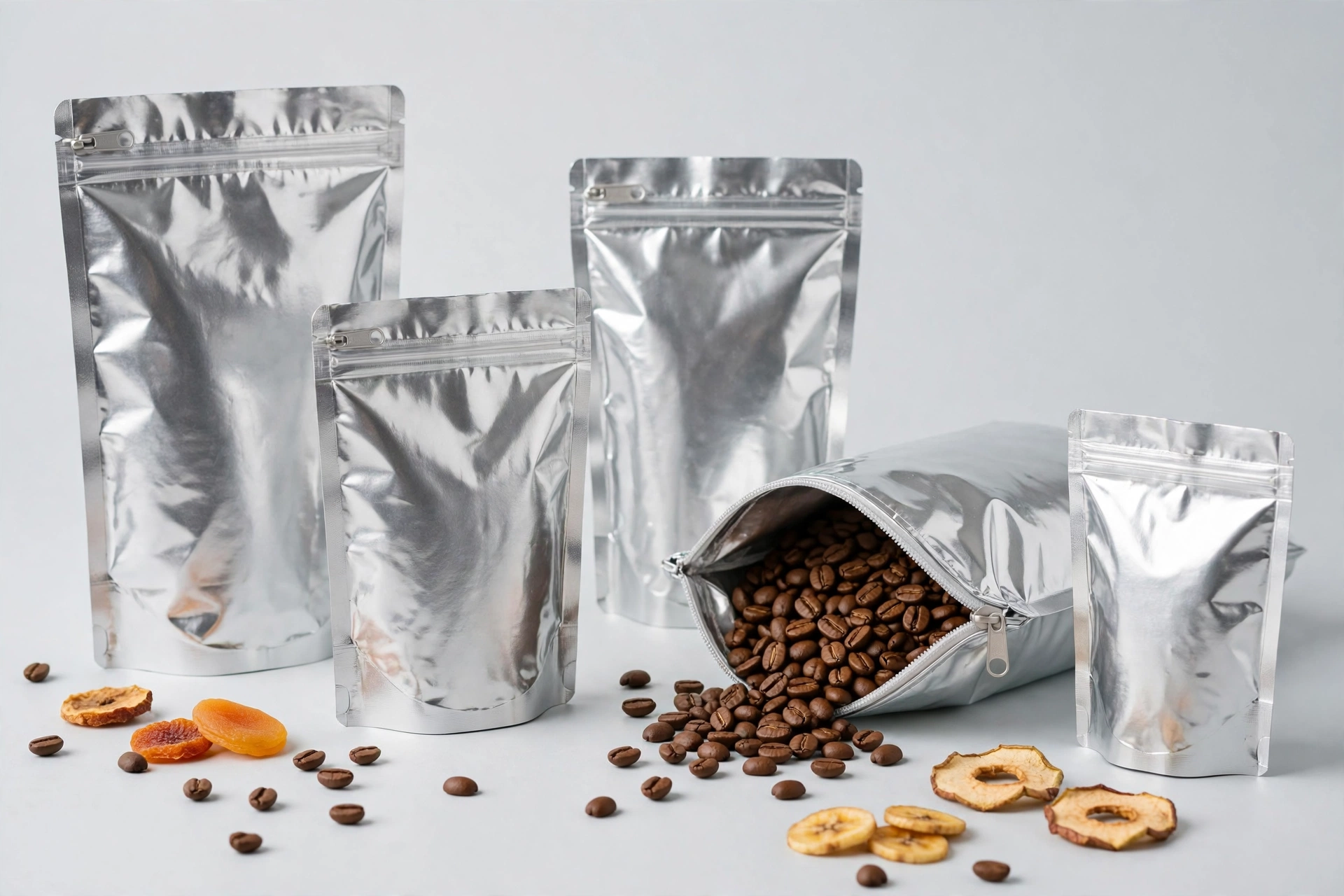
Open a bag of good coffee and you will often find the same thing inside: a shiny, silver pouch that feels thicker than a normal plastic bag. That is a mylar bag. It looks simple, but it is the reason the coffee still smells fresh weeks after roasting.
If you sell food, coffee, or anything that goes stale, this guide explains what mylar bags are, what they are made of, the types you can buy, and how to pick the right one.
What Is a Mylar Bag?
A mylar bag is a sealed pouch made from layered plastic film with a thin metal layer inside. The shiny silver look comes from that metal layer. The word Mylar started as a brand name from DuPont for a type of polyester film, back in the 1950s. Today, people use the word for almost any bag built this way.
Most mylar bags have three layers, and each one has a job:

- Outer layer: A tough polyester film that gives the bag its strength and holds the print.
- Middle layer: A thin layer of aluminum foil, or a metal coating, that blocks light, air, and moisture.
- Inner layer: A food-safe plastic that melts shut when you heat seal it.
That middle layer is the whole point. A normal plastic bag slowly lets air and moisture through its walls. A mylar bag nearly stops them. Light bounces off the silver surface instead of reaching the food. That is why dry goods stored in mylar last far longer than the same goods in a regular bag.
Why Brands Use Mylar Bags
Three things ruin packaged food: oxygen, moisture, and light. Oxygen turns oils stale. Moisture brings mold. Light breaks down flavor and nutrients. Mylar fights all three at once.
That is why you see mylar bags everywhere now:
- Coffee: Keeps roasted beans fresh and holds in the aroma. Many coffee pouches add a small one-way valve so gas can escape without letting air in.
- Dry food: Rice, beans, oats, flour, pasta, and freeze-dried meals store for years in sealed mylar with an oxygen absorber inside.
- Snacks: Nuts, jerky, granola, and dried fruit stay crisp instead of going soft or stale.
- Supplements and pet treats: Protects powders and treats from damp air.
- Smell-sensitive products: The sealed layers trap strong odors inside, which is why herbal and cannabis brands use them too.
For a small brand, the win is simple. Your product reaches the customer tasting the way it did the day you packed it.
Types of Mylar Bags
Mylar bags come in a few common shapes. Pick based on how your product sits on a shelf and how your customer opens it.
- Stand-up pouch
- Flat bottom, stands on a shelf. Best for coffee, snacks, granola.
- Flat pouch
- Two flat sides, no base. Best for single servings, samples.
- Side gusset bag
- Folds on the sides, expands as it fills. Best for bulk dry goods, larger packs.
- Zip lock bag
- Resealable zip at the top. Best for anything opened more than once.
- Window bag
- Clear panel so buyers see the product. Best for retail shelves, colorful products.
- Spouted pouch
- Small spout for pouring. Best for liquids, sauces, oils.
Most brands pick a stand-up pouch with a zip lock and a heat seal above it. The customer tears the top open once, then uses the zip to close it again. Two layers of closing keep the product fresh after the first use.
How Thick Should a Mylar Bag Be?
Thickness is measured in mil, where one mil is a thousandth of an inch. Thicker is stronger, but it also costs more.
| 3.5 mil | Good for everyday retail packs like coffee and snacks. |
|---|---|
| 5 mil | A solid choice for long-term food storage. |
| 7 mil and up | Heavy duty. Used for bulk storage and products that need extra puncture protection. |
For most small brands, 3.5 to 5 mil covers everything. Going thicker only makes sense if the product is sharp, heavy, or stored for years.
How to Seal a Mylar Bag
A mylar bag only works if the seal is airtight. There are three common ways to close one:
- Heat seal: A heat sealer melts the inner layer shut. This is the most airtight option and the one to use for long-term storage.
- Zip lock: Handy for products the customer opens again and again, but a zip alone is not fully airtight.
- Zip plus heat seal: The best of both. Heat seal above the zip for shipping and storage. The customer cuts the seal open and uses the zip after that.
For food stored over months or years, many people drop an oxygen absorber packet inside before sealing. It soaks up the air left in the bag and stretches shelf life even further.
Mylar Bags vs Regular Plastic Bags
It helps to see the difference side by side.
| Blocks light | Mylar bag: yes, nearly all of it. | Regular plastic bag: no. |
|---|---|---|
| Blocks oxygen | Mylar bag: very strong barrier. | Regular plastic bag: weak, air passes through slowly. |
| Blocks moisture | Mylar bag: very strong barrier. | Regular plastic bag: moderate. |
| Holds a heat seal | Mylar bag: yes, airtight. | Regular plastic bag: often, but weaker. |
| Traps odor | Mylar bag: yes. | Regular plastic bag: no. |
| Recyclable | Mylar bag: usually not, layers are bonded. | Regular plastic bag: often yes. |
The last row is the real downside. Because the layers are bonded together, most recycling plants cannot separate them. If your brand leans on eco claims, that is worth knowing before you commit.
Custom Mylar Bags: What You Can Change
If you order custom printed mylar bags, almost everything is adjustable:
- Size: From small single-serve pouches to large bulk bags.
- Color and print: Full-color printing on the outer layer, including matte or gloss finishes.
- Features: Zip locks, tear notches, hang holes, clear windows, and degassing valves for coffee.
- Quantity: Custom runs often start around 500 bags, and digital printing keeps small orders affordable.
Before you order, measure your product with room to spare. A bag that is too tight is hard to seal, and a seal that is hard to make is a seal that fails.
FAQs
Are mylar bags safe for food?
Yes. The inner layer is food-safe plastic, so your product never touches the metal layer. Look for bags marked food grade when you buy.
How long does food last in a mylar bag?
It depends on the food and the seal. Dry goods like rice and beans, sealed with an oxygen absorber, can last years. Coffee and snacks last months past what a normal bag would give you.
Can you reseal a mylar bag after opening it?
If it has a zip lock, yes. For the best result, squeeze the air out before you close the zip. A heat sealer can also reseal the top if you leave enough bag above the zip.
Do mylar bags work without oxygen absorbers?
They still work, because the bag itself blocks air and light. Absorbers just take it further by removing the small amount of air sealed inside with the food.
Are mylar bags recyclable?
Most are not, because the plastic and metal layers are fused together and cannot be pulled apart by standard recycling. Some brands now offer single-material pouches as an eco alternative, but they do not block air and light as well.
What is the difference between a mylar bag and a vacuum bag?
A vacuum bag removes air, but its plastic walls still let small amounts of gas through over time. A mylar bag blocks gas from passing through at all, which is why it keeps food fresh longer.
Final Thoughts
A mylar bag is not fancy packaging. It is working packaging. Three thin layers do what a thick plastic bag cannot: shut out light, air, and moisture, and keep the product inside tasting right.
If you sell anything that stales, softens, or loses its smell, a mylar bag is one of the cheapest upgrades you can make. Pick the right thickness, seal it properly, and the bag does the rest.