
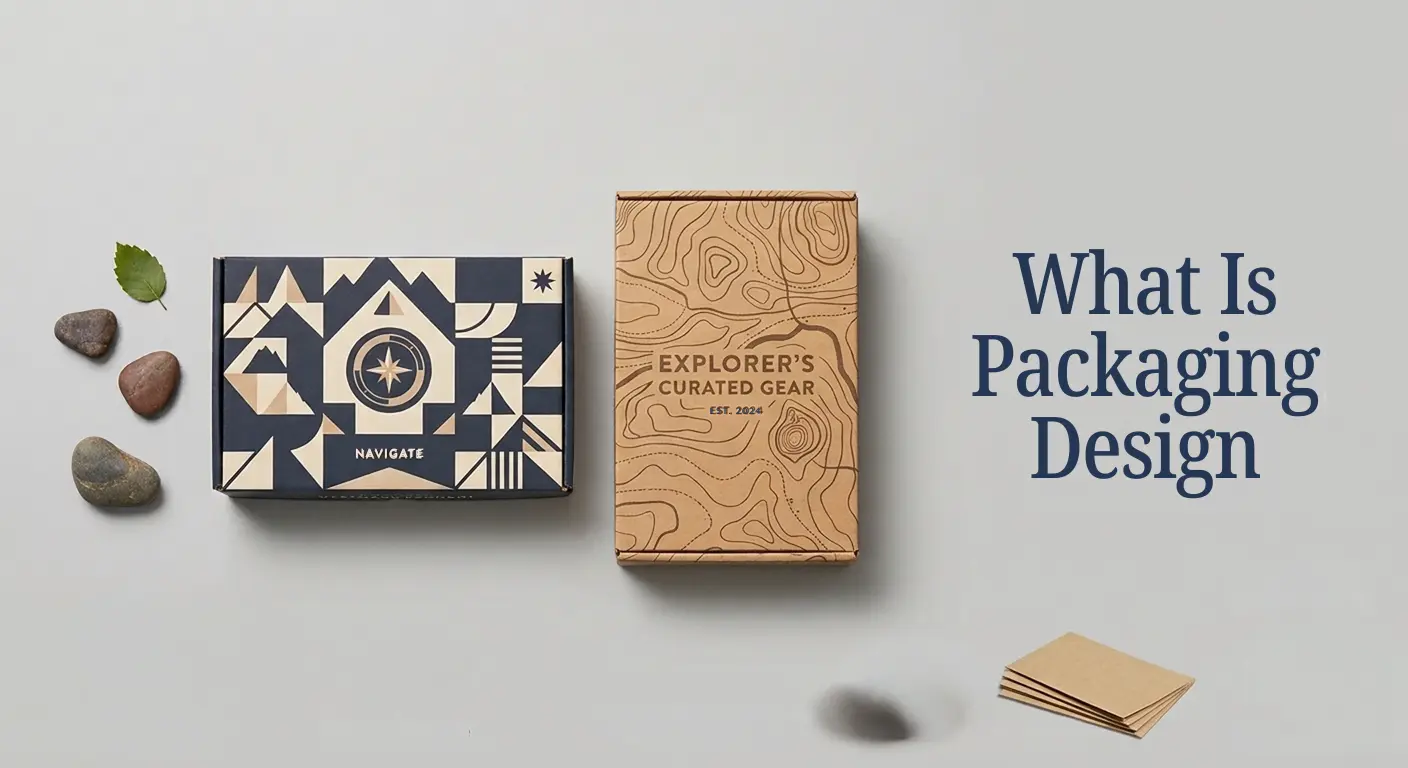
Packaging design is the process of creating the visual appearance, structure, and overall experience of product packaging. It combines branding, graphics, materials, shapes, printing, and functionality to create packaging that protects a product while communicating with customers.
A package is often the first physical part of a product that a customer sees. Its colors, typography, shape, images, and material can influence how the product is perceived before the package is even opened.
Whether a brand sells food, cosmetics, candles, electronics, clothing, or subscription products, thoughtful packaging design can help create a consistent and recognizable customer experience.
What Does Packaging Design Include?
Packaging design is more than putting a logo on a box. It brings several elements together to create packaging that works visually and practically.

A packaging project may include:
- Box or container structure
- Brand colors
- Logo placement
- Typography
- Product information
- Graphics and illustrations
- Product photography
- Materials
- Labels and stickers
- Printing methods
- Special finishes
- Inserts and protective elements
- Opening and closing features
The exact combination depends on the product, target customer, packaging format, and selling environment.
Why Is Packaging Design Important?
Good packaging has to do several jobs at once. It should protect the product, communicate useful information, represent the brand, and make the package suitable for its intended environment.
Creates Brand Recognition
Consistent packaging helps customers recognize a brand across different products. Using a recognizable combination of colors, typography, graphics, and logo placement can create a stronger visual identity.
Communicates the Product
Packaging gives customers important information about what they are buying. Product names, descriptions, ingredients, instructions, sizes, and other details can be arranged so they are easy to understand.
Influences First Impressions
Customers often form an initial opinion based on appearance. Clean typography, appropriate colors, quality materials, and a well-organized layout can help a package communicate the intended positioning of a product.
Protects the Product
Packaging design also has a practical purpose. The structure should match the product’s size, weight, fragility, and handling requirements.
A visually attractive package is not successful if the product arrives damaged.
Supports Online Selling
Packaging is also important for e-commerce brands. Products may be photographed for online stores, shown on social media, packed for shipping, and opened by customers at home.
This means packaging should look good both in photographs and in real life.
The Main Elements of Packaging Design
Several elements work together to create a complete packaging system.
1. Brand Identity
The logo, colors, typography, imagery, and other brand elements should work together rather than appearing as separate pieces.
Strong packaging usually feels connected to the rest of the brand.
2. Color
Color can help establish the mood and visual identity of a package.
For example, a brand may use muted colors for a minimalist appearance or stronger contrasts to create a more energetic look.
Color choices should also consider readability and the product category.
3. Typography
Typography determines how written information looks and feels.
A packaging design may use one typeface for the product name and another for supporting information. The hierarchy should make important details easy to find.
4. Images and Graphics
Illustrations, patterns, photographs, icons, and other graphics can help explain or visually represent the product.
The graphics should support the overall concept rather than make the package difficult to understand.
5. Shape and Structure
The physical structure is part of packaging design.
Boxes can be designed with different opening methods, folds, lids, drawers, windows, or inserts depending on the product and customer experience.
6. Materials
Paperboard, corrugated board, rigid board, kraft paper, flexible films, glass, metal, and other materials can create very different packaging experiences.
Material selection should consider protection, appearance, production requirements, shipping, and the product itself.
7. Finishing
Finishing can add visual or tactile details to printed packaging.
Common options include:
- Matte or gloss coatings
- Foil stamping
- Embossing
- Debossing
- Spot UV
- Soft-touch finishes
These techniques should be selected for a specific design purpose rather than simply adding decoration.
What Makes Packaging Design Effective?
Effective packaging design is not necessarily the most complicated design. In many cases, successful packaging communicates its purpose quickly and clearly.
A strong design usually has:
Clear Visual Hierarchy
Customers should be able to identify the brand and product without searching through unnecessary visual elements.
Appropriate Structure
The package should fit the product properly and provide the level of protection required.
Consistent Branding
Colors, typography, imagery, and other brand elements should create a recognizable system across products.
Useful Information
Important product information should be readable and placed where customers can easily find it.
Practical Functionality
Opening, closing, carrying, storing, and shipping should be considered during the design stage.
A Distinctive Concept
Packaging can have recognizable details that help a product stand apart without making the design confusing.
What goes into Creating Great Packaging Design?
Packaging design normally develops through several stages. The exact process varies between projects, but a typical workflow looks like this.
Step 1: Understand the Product
Start by identifying the product’s dimensions, weight, fragility, purpose, and selling environment.
A candle, cosmetic bottle, food item, and electronic accessory may all require completely different packaging solutions.
Step 2: Define the Target Customer
The design should reflect the people who are expected to purchase the product.
Consider their expectations, shopping habits, preferred visual styles, and the environment where they will encounter the packaging.
Step 3: Research the Market
Review competing products to understand how the category communicates visually.
The purpose is not to copy competitors. Instead, research helps identify common conventions and opportunities for creating a distinct brand presentation.
Step 4: Choose the Packaging Structure
Decide whether the product needs a folding carton, rigid box, mailer box, pouch, bottle, sleeve, tube, or another format.
The structure should support both product protection and the intended customer experience.
Step 5: Develop the Visual Direction
Create the main visual concept, including colors, typography, graphics, photography, and brand placement.
At this stage, the goal is to establish the design language before final production artwork is prepared.
Step 6: Create the Dieline
For boxes and other folded packaging, a dieline shows the exact cutting and folding areas.
Artwork is positioned according to this structural template so the printed design fits the finished package correctly.
Step 7: Prepare the Artwork
The final artwork is prepared for the selected printing process and packaging material.
Important details can include dimensions, bleed, color setup, fonts, images, and finishing requirements.
Step 8: Produce a Prototype
A physical sample can reveal problems that may not be obvious on a computer screen.
The prototype can be checked for size, appearance, opening experience, product fit, and overall functionality.
Step 9: Test and Refine
Make adjustments based on the prototype and practical testing.
A package may need changes to its structure, graphics, materials, inserts, or information layout.
Step 10: Move to Production
Once the design has been approved and tested, the packaging can move into printing and manufacturing.
Packaging Design for Different Industries
Packaging requirements change significantly from one industry to another.
Food Packaging
Food packaging needs to communicate the product clearly while considering protection, handling, storage, and applicable labeling requirements.
Designs may use illustrations, product photography, color systems, or typography to distinguish different flavors and varieties.
Cosmetic Packaging
Cosmetic packaging often places strong emphasis on visual identity and perceived product quality.
Boxes, sleeves, bottles, jars, labels, and inserts can all be designed as part of one consistent system.
Candle Packaging
Candle packaging often focuses on brand personality, material appearance, and protection.
Rigid boxes, folding cartons, inserts, sleeves, and kraft packaging can be selected depending on the product and positioning.
E-Commerce Packaging
E-commerce packaging has to account for shipping and handling.
Mailer boxes, corrugated packaging, protective inserts, and branded interior elements can combine product protection with a better unboxing experience.
Luxury Products
Luxury packaging often uses carefully controlled typography, materials, structural details, and finishing techniques.
The objective is usually to create a refined experience rather than simply adding as many decorative elements as possible.
Packaging Design for Small Businesses
Small businesses do not need enormous packaging budgets to create a professional presentation.
A focused design system can often make a bigger difference than adding expensive features.
Small brands can consider:
- Using a simple but recognizable color palette
- Keeping typography consistent
- Creating one strong packaging concept
- Using branded stickers or labels
- Selecting practical box sizes
- Adding a simple thank-you card
- Using custom tissue paper or inserts where appropriate
- Designing packaging that photographs well
- Ordering packaging quantities that match realistic demand
The goal is to create packaging that looks intentional and supports the brand without unnecessary complexity.
How Can Packaging Become More Shareable on Social Media?
Packaging can become part of a customer’s content when the physical experience is visually interesting.
A memorable unboxing experience might include:
- Attractive exterior graphics
- A well-designed opening sequence
- Interesting interior printing
- Personalized messages
- Branded tissue or inserts
- A distinctive package structure
- Carefully arranged products
- Small visual details that photograph well
However, shareability should not come at the expense of functionality. The package still needs to protect the product and remain practical to produce and ship.
Packaging Design for Subscription Boxes
Subscription box packaging has a different challenge because customers may receive the same brand repeatedly.
The design can therefore focus on creating a recognizable system while allowing individual boxes to have different themes, products, or seasonal artwork.
Useful considerations include:
- Consistent brand elements
- Easy opening
- Efficient shipping dimensions
- Interior presentation
- Protective inserts
- Seasonal design variations
- Reusable or recyclable components where appropriate
A flexible packaging system can help a subscription brand maintain consistency while keeping each delivery visually interesting.
Sustainable Packaging Design
Sustainability has become an important consideration for many packaging projects.
Sustainable packaging design can involve more than simply choosing a material labeled as environmentally friendly.
Designers can consider:
- Reducing unnecessary packaging
- Using appropriately sized boxes
- Selecting recyclable materials where suitable
- Incorporating recycled content
- Designing packaging for efficient shipping
- Avoiding unnecessary material combinations
- Providing clear disposal information
- Considering whether components can be reused
The appropriate solution depends on the product, market, packaging system, and local recycling or disposal infrastructure.
Packaging Design Trends
Packaging design continues to evolve as brands respond to changing customer expectations, retail environments, and digital shopping.
Some design directions include:
Minimal Visual Systems
Simplified layouts can make products easier to recognize and information easier to read.
Tactile Packaging
Textures and physical finishes can add another layer to the customer experience.
Flexible Brand Systems
Brands are increasingly creating design systems that can adapt across different products rather than using exactly the same artwork everywhere.
Purposeful Sustainable Design
Brands may focus on material reduction, recyclable formats, recycled content, and clearer communication around disposal.
Digital Connections
QR codes and other digital elements can connect physical packaging with product information, instructions, brand content, or other online experiences.
Packaging Designed for the Camera
E-commerce and social media have increased the importance of packaging that remains visually appealing when photographed or recorded.
Packaging Design vs Graphic Design
Packaging design and graphic design overlap, but they are not identical.
Graphic design focuses primarily on visual communication across formats such as websites, advertisements, posters, publications, and digital media.
Packaging design applies visual communication to a physical package while also considering structure, materials, printing, protection, manufacturing, storage, and customer use.
A packaging designer therefore has to think about both the artwork and the physical object carrying that artwork.
How Much Does Packaging Design Cost?
Packaging design costs vary considerably depending on the project.
Factors that can affect the total cost include:
- Package type
- Number of product variations
- Structural complexity
- Artwork requirements
- Illustration or photography
- Material selection
- Printing method
- Finishing
- Prototype requirements
- Designer experience
- Production quantity
A simple label design may require far less work than a complete packaging system involving custom structural design, multiple product sizes, illustrations, and specialty finishes.
A Simple Packaging Design Checklist
Before sending packaging artwork to production, review:
- Is the brand clearly visible?
- Is the product easy to identify?
- Is important information readable?
- Does the design match the brand identity?
- Is the packaging structure suitable for the product?
- Does the material provide adequate protection?
- Is the artwork correctly aligned with the dieline?
- Have colors and images been checked?
- Have finishing requirements been confirmed?
- Has a physical proof or prototype been reviewed?
- Does the package work for shipping and storage?
- Does the final design make sense for the target customer?
Final Thoughts
Packaging design combines visual communication, physical structure, materials, functionality, and brand identity. It is not simply about making a box look attractive.
A successful packaging project starts with understanding the product and customer, then develops a structure and visual system that work together. From typography and color to materials, printing, inserts, and the unboxing experience, every element can contribute to how a product is presented.
Whether you are launching a small product line, improving e-commerce packaging, developing a luxury package, or creating a subscription box, thoughtful packaging design can turn an ordinary package into a meaningful part of the product experience.
FAQs
What is packaging design in simple words?
Packaging design is the process of creating how a product’s package looks, works, and communicates with customers. It includes visual elements such as colors and graphics as well as structure, materials, and functionality.
What are the main elements of packaging design?
The main elements include branding, color, typography, graphics, structure, materials, product information, layout, printing, and finishing.
What is the difference between packaging and packaging design?
Packaging is the physical container or material used to hold and protect a product. Packaging design is the process of planning its appearance, structure, information, functionality, and overall customer experience.
How do you start a packaging design project?
Start by understanding the product, target customer, brand identity, packaging requirements, and selling environment. Then research the market and develop the structure and visual direction.
Is packaging design important for small businesses?
Yes. A clear and consistent packaging design can help small businesses present their products professionally and create a recognizable brand experience without requiring an overly complicated package.
What materials are commonly used in packaging design?
Common materials include paperboard, corrugated board, rigid board, kraft paper, flexible materials, glass, and metal. The appropriate choice depends on the product and packaging requirements.