
Empanadas are loved for their convenient size, crispy texture, and wide range of fillings. But for restaurants, bakeries, food trucks, and takeaway businesses, choosing the right packaging is just as important as preparing the food. Sustainable food packaging for empanadas can help reduce unnecessary plastic while keeping the product protected during storage, transport, and serving.
As more food businesses look for practical alternatives to traditional plastic packaging, empanada packaging is also moving toward recyclable, compostable, lightweight, and paper-based solutions. The best option, however, depends on whether the empanadas are served fresh, delivered hot, displayed for retail, or sold frozen.
Why Sustainable Packaging Matters for Empanadas
Empanada packaging needs to handle more than appearance. It should protect the food from crushing, contain oils and sauces, and make transportation easier.
Traditional packaging can sometimes use more material than necessary or rely heavily on plastic. Sustainable packaging gives businesses an opportunity to reduce material use while creating a cleaner presentation.

For customers, packaging can also become part of the overall food experience. A simple kraft box, recyclable paper sleeve, or well-designed paperboard tray can communicate a more thoughtful brand approach.
1. Kraft Paper Boxes Are Becoming a Practical Choice
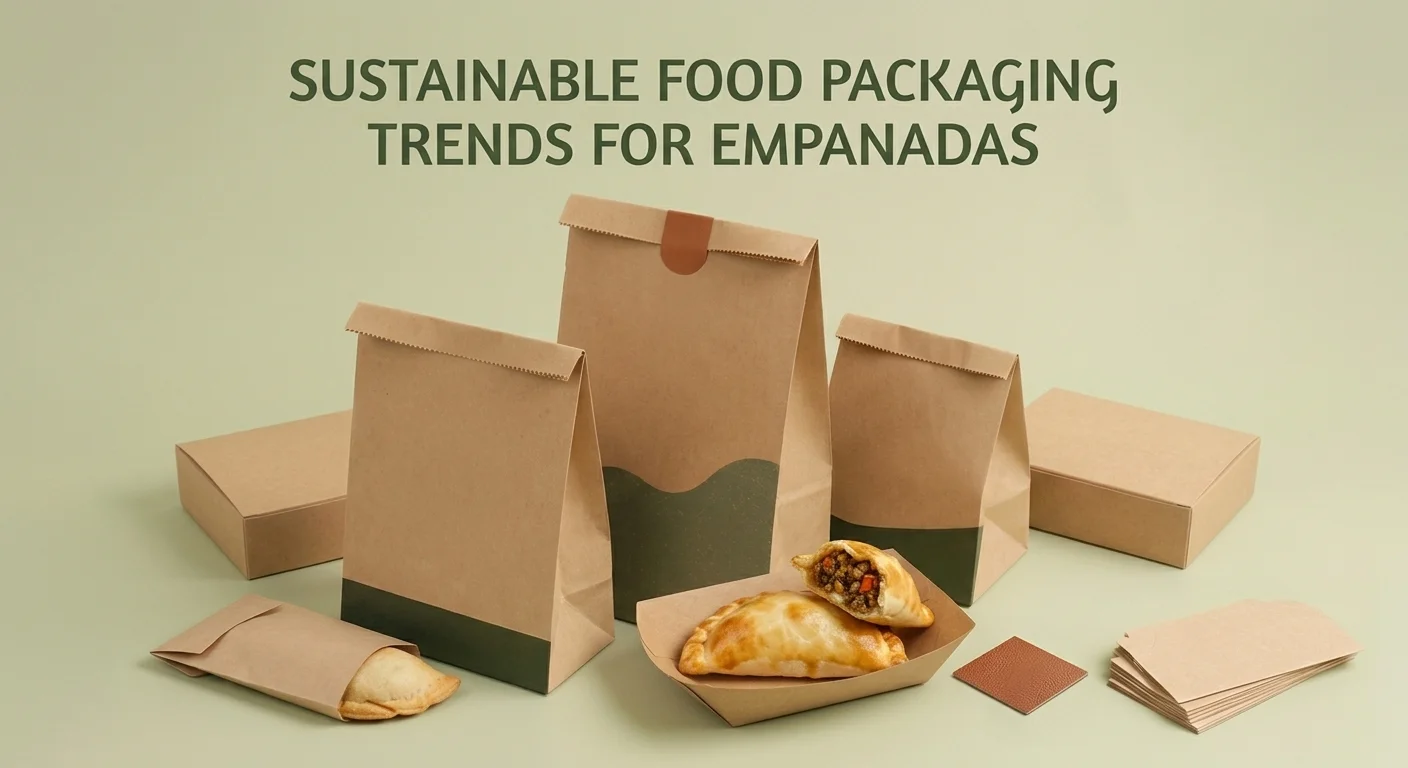
Kraft paper is one of the most recognizable materials in food packaging. Its natural appearance works particularly well for restaurants and small food brands that want a simple, authentic look.
Kraft boxes can be designed in different sizes to hold individual empanadas or multiple pieces. They can also be printed with a logo, product information, or simple brand graphics.
For greasy or moist foods, the box should be designed with an appropriate food-safe barrier rather than relying on untreated paper alone.
2. Compostable Packaging for Takeaway Orders
Compostable packaging is another option businesses are exploring for takeaway food.
Compostable trays, containers, and food-service materials can be useful when businesses want to reduce their dependence on conventional plastic. However, compostable does not automatically mean suitable for every disposal system.
Businesses should check whether the material is certified for its intended use and whether commercial composting facilities are actually available in their target market.
3. Recyclable Paperboard Empanada Boxes
Paperboard can provide a balance between presentation, protection, and recyclability.
A recyclable paperboard box can be produced in different shapes and sizes depending on the number of empanadas being sold. It can also provide a larger printable surface for branding than a basic food wrapper.
For retail or takeaway businesses, this makes paperboard particularly useful when packaging needs to look professional without becoming overly complicated.
4. Grease-Resistant Paper for Individual Empanadas
Not every empanada needs a full box.
For single servings, grease-resistant paper can provide a lightweight packaging solution. A paper wrap, pouch, or food-safe sheet can help contain oil while making the product easier to handle.
This approach can reduce the amount of packaging used per serving, especially for customers who are eating the empanada immediately.
5. Minimal Packaging Designs
One of the simplest sustainability trends is using less packaging.
Instead of combining a plastic bag, paper wrapper, insert, and box, businesses can consider whether one properly designed package can perform the necessary functions.
Minimal packaging can also create a cleaner visual identity. A simple logo, product name, and a small amount of useful information may be enough.
The goal should not simply be to make packaging smaller. It should be to remove unnecessary components without sacrificing food protection.
6. Packaging Designed for Delivery
Delivery creates different packaging requirements.
Empanadas can become crushed, lose their texture, or move around inside a poorly fitted container. Sustainable delivery packaging therefore needs to combine material efficiency with adequate protection.
A fitted paperboard box can help keep products organized during transportation. Small ventilation considerations may also be important for hot empanadas because trapped steam can affect crispness.
For delivery brands, the most sustainable package is not necessarily the lightest one. A package that prevents damaged or wasted food can provide greater practical value.
7. Recycled Materials in Food Packaging
Packaging made with recycled content is another trend worth considering.
Recycled paper and paperboard can help businesses reduce reliance on virgin material, although the exact suitability depends on the application and food-contact requirements.
For empanada brands, recycled-content packaging can be particularly attractive when combined with simple printing and efficient box construction.
Always confirm that the selected material is appropriate for direct or indirect food contact based on how the empanadas are packaged.
8. Smaller Packaging for Smaller Orders
Not every customer needs a large container.
Offering different box sizes can help businesses match packaging to order quantity. An individual order could use a smaller package, while family-sized orders could use a larger box.
This approach can reduce empty space and unnecessary material.
It can also make delivery more efficient because properly sized packaging takes up less room during transportation.
9. Plastic-Free Packaging Options
Some businesses are moving toward packaging systems that reduce or eliminate conventional plastic components.
For empanadas, this could mean using paperboard boxes, paper wraps, molded fiber trays, or other suitable fiber-based materials.
However, removing plastic should not be the only consideration. The replacement material still needs to protect the food and perform properly under real storage and serving conditions.
10. Simple Printing for a Cleaner Look
Sustainable packaging does not need to look plain.
A kraft or paperboard empanada box can use a simple logo, one-color design, small illustrations, or carefully placed typography to create a recognizable appearance.
Using a restrained design can also reduce visual clutter and help the packaging communicate the brand more clearly.
For small businesses, a simple printed box can be easier to manage than highly complicated packaging with multiple finishing techniques.
11. Packaging for Fresh and Frozen Empanadas
Fresh and frozen empanadas should not automatically use the same packaging.
Fresh takeaway products may need packaging that manages heat, grease, and moisture. Frozen products may require packaging designed for cold storage and longer shelf life.
This means sustainability should be considered together with the product’s actual storage conditions.
A material that works well for a freshly baked empanada may not be the right choice for a frozen retail product.
12. Custom Packaging Without Excess Material
Custom packaging allows brands to control the size, shape, graphics, and functionality of their boxes.
For empanadas, custom sizing can reduce unused space and create a better fit around the product. A well-sized package can also reduce the need for additional filler materials.
The most useful custom packaging is not necessarily the most elaborate. A simple structure designed around the actual product can often be more practical.
13. Reusable Packaging for Selected Food Businesses
Reusable packaging can work in specific food-service models where customers regularly return containers or where food is served within a controlled environment.
For a typical takeaway order, however, reusable packaging may require a collection, cleaning, and return system.
Businesses should therefore evaluate the complete system rather than choosing reusable packaging simply because it sounds more sustainable.
Choosing the Right Sustainable Empanada Packaging
There is no single packaging material that works for every empanada business.
Before selecting a package, consider:
- Product temperature: Will the empanadas be hot, chilled, or frozen?
- Grease and moisture: Can the material handle the food without becoming weak?
- Order size: Will customers usually buy one, two, six, or more pieces?
- Delivery distance: Does the package need additional protection?
- Branding: How much printing space is required?
- Disposal: Can customers realistically recycle or compost the material?
- Food-contact suitability: Is the material appropriate for the intended application?
- Storage: Will the packaging be exposed to refrigeration or freezing?
- Material use: Can the same protection be achieved with less material?
A Better Approach to Sustainable Empanada Packaging
Sustainability is not just about choosing a material with the word “eco” on its label.
A better approach is to look at the entire packaging system. Use an appropriately sized package, avoid unnecessary components, select materials that suit the food, and provide clear disposal information where appropriate.
For some businesses, recyclable paperboard may be the best option. For others, a grease-resistant paper wrap or compostable food container may make more sense.
The right choice is the one that balances food protection, material efficiency, customer experience, branding, and realistic end-of-life disposal.
Final Thoughts
The future of sustainable food packaging for empanadas is not limited to one material or box style. Kraft paper, recyclable paperboard, compostable options, grease-resistant wraps, recycled-content materials, and minimal packaging designs can all have a place when they are selected for the right application.
For empanada businesses, the best packaging strategy starts with the product itself. Consider how the food is prepared, served, transported, stored, and disposed of before choosing the package.
A well-designed sustainable package should protect the empanada without creating unnecessary material, while giving the brand a clean and memorable presentation.
FAQs
What is the best sustainable packaging for empanadas?
The best option depends on how the empanadas are served. Recyclable paperboard boxes, kraft packaging, grease-resistant paper, and suitable compostable containers can all work for different applications.
Are kraft boxes good for empanadas?
Yes, kraft boxes can be suitable for empanadas when they are designed with the appropriate food-safe construction and grease or moisture resistance.
Can empanadas be packaged without plastic?
Yes. Paperboard boxes, paper wraps, molded fiber packaging, and other fiber-based options can reduce or eliminate conventional plastic depending on the product requirements.
Is compostable packaging better than recyclable packaging?
Not always. Both options have different environmental and disposal considerations. The better choice depends on the material, local waste infrastructure, product requirements, and how customers are expected to dispose of the package.
What should an empanada box include?
An empanada box may include branding, product information, storage or reheating instructions where relevant, and appropriate disposal information. The exact information depends on the product and market.