

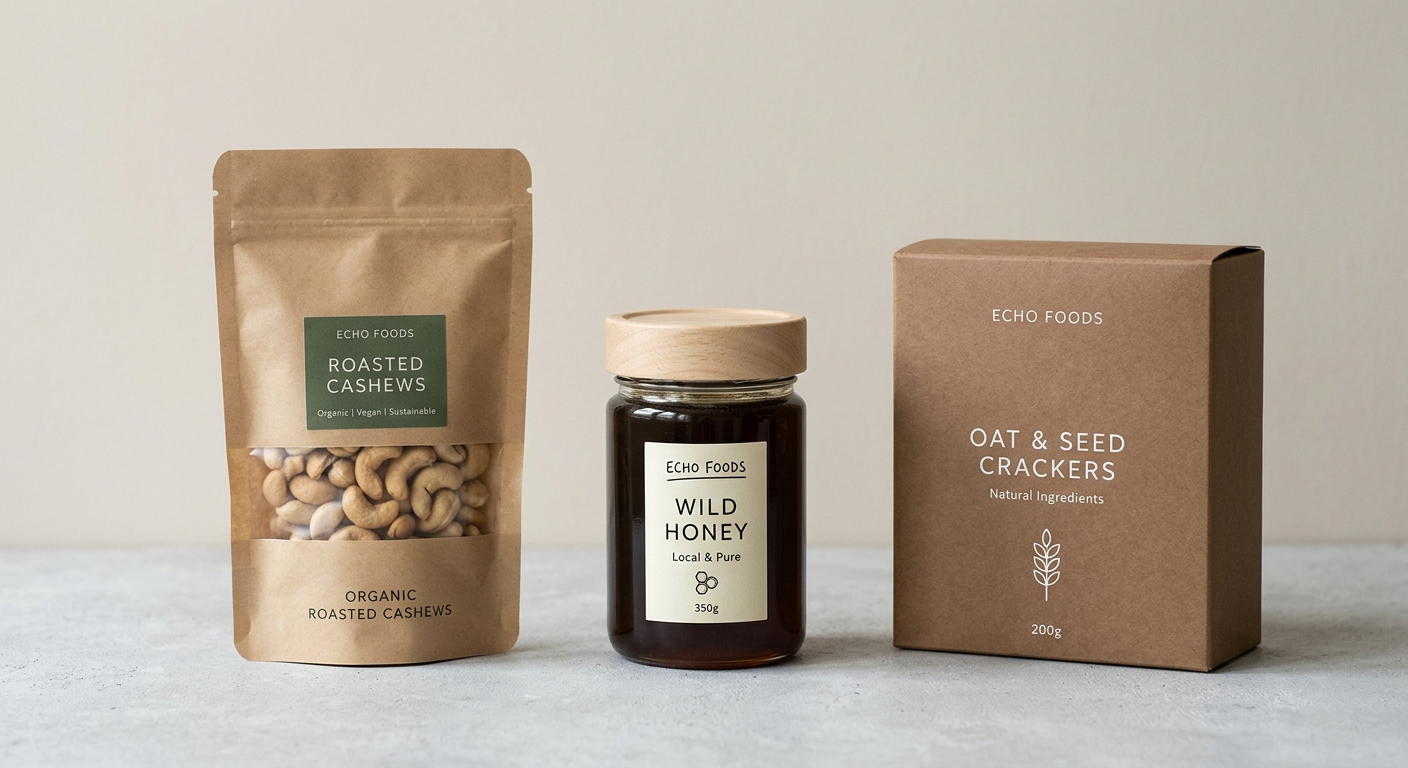
Food products do not all need the same type of packaging. A box that works well for cupcakes may not be suitable for frozen meals, while a resealable pouch that protects snacks may be completely wrong for a delicate cake.
The right food packaging needs to match the product itself. Moisture, temperature, freshness, weight, shape, handling, storage, and the way customers consume the food can all influence the packaging choice.
For brands, packaging also needs to present the product clearly and create a consistent visual identity. Here are practical food packaging ideas for different types of food products.
1. Bakery Products
Bread, pastries, cookies, muffins, and cakes each have different packaging requirements.

Bread can work well in paper bags or breathable packaging that allows the product to maintain its desired texture. Cookies and biscuits can be packed in printed pouches, cartons, or boxes, while cakes generally need stronger boxes with enough internal space to protect their shape.
For cupcakes and delicate pastries, inserts can help keep individual pieces from moving during transportation.
A useful approach is to design bakery packaging around the actual product rather than choosing a box simply because it looks attractive.
2. Snacks and Dry Foods
Chips, nuts, granola, dried fruit, popcorn, and similar products are often suited to flexible packaging such as pouches and bags.
Stand-up pouches can provide shelf presence while also offering convenient storage. Resealable formats can be useful for products that customers consume over several occasions.
For premium snacks, a combination of strong typography, clear product information, and a distinctive package shape can create a more recognizable shelf appearance.
3. Frozen Foods
Frozen products need packaging that can handle low temperatures and transportation without losing its protective function.
Frozen vegetables, ready meals, frozen snacks, and similar products can use flexible pouches, cartons, trays, or combinations of these formats depending on the product.
Packaging design should make important information easy to find, including the product name, preparation instructions, storage information, and quantity.
A strong frozen-food package should also remain visually clear when displayed among many competing products.
4. Takeaway and Ready-to-Eat Meals
Takeaway meals have a different challenge because packaging needs to deal with heat, moisture, grease, movement, and delivery.
Boxes, paperboard containers, bowls, trays, and other food-service formats can be selected according to the meal.
Fried foods may need ventilation to help manage steam, while sauces and liquid-heavy meals require containers with secure closures and leak resistance. Ready-to-eat bowls can benefit from stackable designs that are easy to carry and store.
The packaging should also make the meal convenient to open and eat without creating unnecessary mess.
5. Fresh Produce
Fresh fruits and vegetables require packaging that considers airflow, moisture, visibility, and handling.
Depending on the product, suitable formats can include trays, cartons, perforated bags, punnets, or other breathable structures.
Clear sections or windows can also allow customers to inspect the product before buying it.
For fresh produce, packaging should protect the food without creating an unnecessarily heavy or complicated package.
6. Meat and Seafood
Meat and seafood packaging needs to provide strong protection while supporting appropriate storage and transportation conditions.
Trays with protective films, vacuum packaging, sealed pouches, and other specialized formats are commonly used depending on the product and distribution system.
For retail packaging, clear presentation can help customers identify the product, while labels need to provide important product and storage information.
The packaging material and sealing method should always be selected according to the food product and applicable food-safety requirements.
7. Sauces, Jams, and Spreads
Liquid and semi-liquid foods require packaging that prevents leakage and makes dispensing convenient.
Glass jars, plastic containers, bottles, squeeze packs, and spouted pouches can all be used for products such as sauces, jams, honey, dressings, and spreads.
The closure is particularly important. A well-designed package should be easy to open, close, store, and use.
For premium products, the container itself can also become an important part of the brand identity.
8. Coffee and Tea
Coffee and tea packaging needs to protect the product while making storage and everyday use convenient.
Pouches, bags, tins, cartons, and individual sachets are common options.
Coffee packaging can benefit from resealable closures and strong barrier properties where appropriate. Tea may be packaged as loose leaves, bags, or individually wrapped portions, depending on the product.
Design-wise, coffee and tea brands have considerable room to create distinctive packaging through typography, color systems, illustrations, and material choices.
9. Confectionery and Chocolate
Chocolate, candy, truffles, and other confectionery products often rely heavily on packaging presentation.
Small cartons, folding boxes, rigid boxes, wrappers, pouches, and trays can be used depending on the product and positioning.
Premium chocolate brands may use structured boxes, sleeves, inserts, or specialty finishes to create a more gift-oriented presentation.
For everyday confectionery, colorful graphics and clear product identification can help individual products stand apart.
10. Cereal, Rice, Pasta, and Other Pantry Foods
Dry pantry products need packaging that protects the contents during storage while making the product easy to identify and handle.
Folding cartons, bags, pouches, and resealable formats can work for different products.
A cereal carton, for example, provides a large printable surface for branding, nutritional information, product details, and illustrations. Rice, pasta, and similar products may benefit from bags or pouches that are easier to store.
For products used repeatedly, resealable packaging can add practical value.
11. Beverages
Beverages are commonly packaged in bottles, cans, cartons, cups, and pouches.
The right format depends on the type of drink, serving size, storage requirements, distribution method, and customer use.
A beverage package also has a limited surface area, so branding and product information need to be organized carefully. A recognizable label, consistent color system, and clear product name can make the package easier to identify.
For multipacks, secondary packaging can also be used to group several individual containers for retail or transportation.
12. Food Packaging for Small Businesses
Small food businesses do not always need complicated packaging.
A bakery, home-based food business, café, snack company, or local producer can start with a simple package and build a recognizable identity through labels, stickers, sleeves, stamps, or custom printing.
The important thing is to choose packaging that fits the product and selling method.
For example, a local bakery selling cookies online may need packaging that protects the cookies during shipping, while a café selling takeaway desserts may prioritize easy carrying and attractive presentation.
Food Packaging Comparison by Product Type
| Food Product | Suitable Packaging | Key Requirement | Useful Feature |
| Bakery Products | Boxes, paper bags, trays | Protection and presentation | Inserts or windows |
| Snacks | Pouches, bags, cartons | Moisture and freshness | Resealable closure |
| Frozen Foods | Pouches, cartons, trays | Low-temperature protection | Strong seals |
| Takeaway Meals | Food boxes, bowls, trays | Heat and leak resistance | Secure closure |
| Fresh Produce | Trays, cartons, perforated bags | Airflow and protection | Product visibility |
| Meat & Seafood | Trays, vacuum packs, sealed pouches | Product protection | Secure sealing |
| Sauces & Spreads | Jars, bottles, squeeze packs | Leak prevention | Easy dispensing |
| Coffee & Tea | Pouches, bags, tins, cartons | Freshness and storage | Resealable format |
| Chocolate & Confectionery | Boxes, wrappers, pouches | Protection and presentation | Inserts or specialty finishes |
| Cereal & Dry Foods | Cartons, bags, pouches | Dry storage | Resealable opening |
| Beverages | Bottles, cans, cartons | Safe storage and handling | Easy-to-carry format |
How to Choose the Right Food Packaging
Instead of starting with the package shape, start with the food.
Ask these questions:
- Is the food dry, fresh, oily, frozen, or liquid?
- Does it need protection from moisture or air?
- Is the product fragile?
- Will it be refrigerated or frozen?
- Will it be shipped or only sold locally?
- Does the customer need to reseal the package?
- How much visibility does the product need?
- What information must appear on the package?
- What packaging materials fit the product and intended use?
Food packaging is essentially a balance between protection, convenience, presentation, cost, and the requirements of the product.
Final Thoughts
The best food packaging idea is not necessarily the most elaborate one. It is the format that works naturally with the food inside.
A bakery product may need structural protection, snacks may benefit from flexible resealable packaging, frozen foods need formats suited to low temperatures, and takeaway meals require packaging that handles heat, moisture, and movement.
Once the product’s actual requirements are understood, packaging design becomes much easier. The structure, material, graphics, closure, and finishing can then be chosen to support both the food and the brand.
FAQs
What is the best packaging for food products?
There is no single best option for every food product. The appropriate packaging depends on the food’s characteristics, storage conditions, protection requirements, distribution method, and intended use.
What are some food packaging ideas for small businesses?
Small businesses can consider custom boxes, printed pouches, paper bags, food-safe containers, sleeves, labels, stickers, and simple branded packaging systems depending on the product.
What packaging is commonly used for snacks?
Snacks are commonly packaged in bags, pouches, cartons, and other flexible formats. Resealable pouches can be useful for products that are consumed over multiple servings.
How do I choose packaging for a new food product?
Start by evaluating the food’s moisture, temperature, shelf-life, shape, fragility, storage, transportation, and serving requirements. Then compare packaging formats that meet those needs.